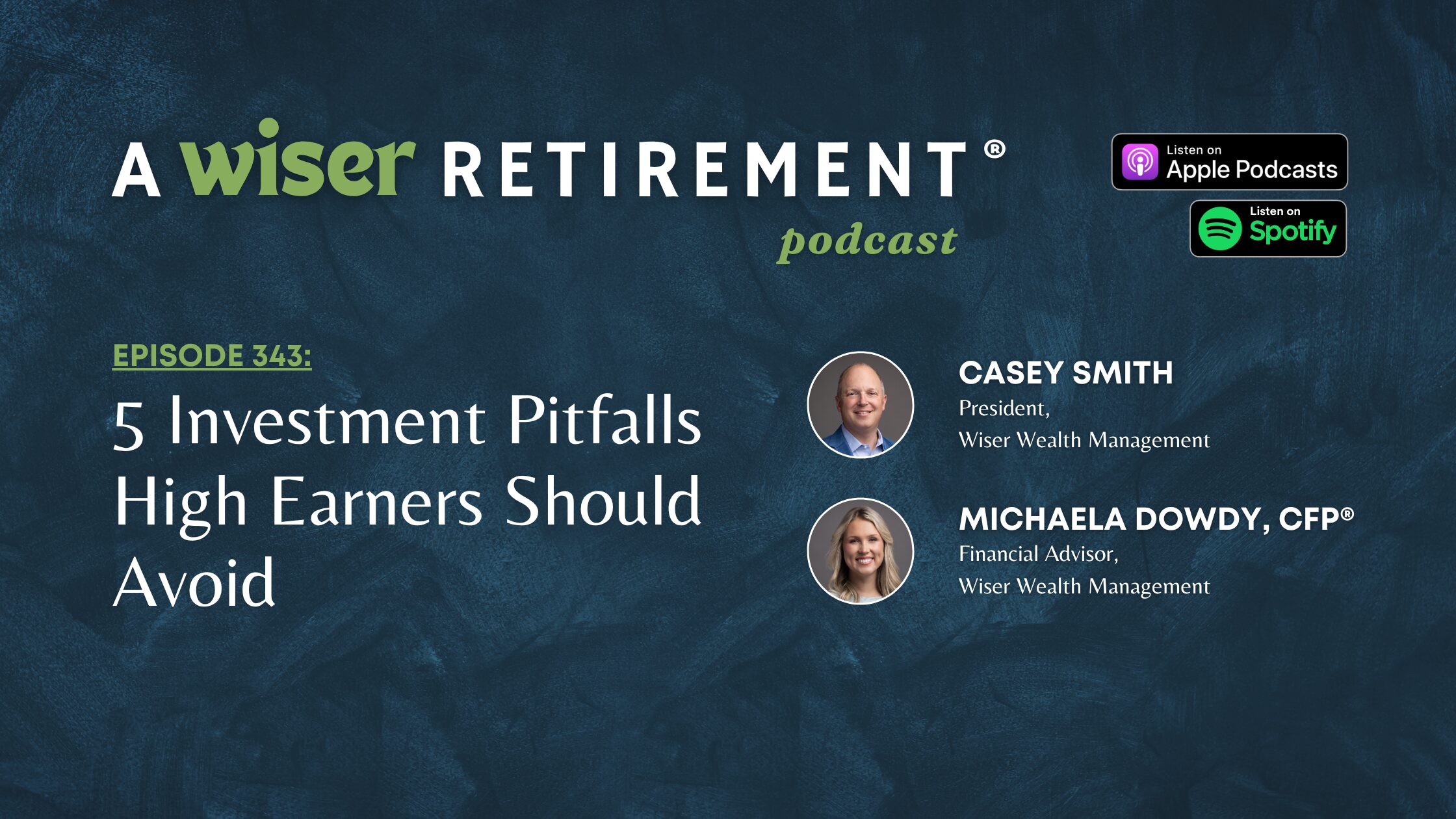
5 Investment Pitfalls High Earners Should Avoid
Listen or Watch
Summary
Pitfall #1: Lack of Coordination Between Financial Professionals
One of the biggest mistakes high earners make is assuming their financial advisor, CPA, attorney, and other professionals are all working together behind the scenes. In reality, these professionals often operate independently, which can lead to conflicting strategies, unnecessary taxes, and inefficient business structures.
A comprehensive financial plan should connect investment management, tax planning, estate planning, and retirement strategy under one coordinated approach. Without that coordination, important details can easily fall through the cracks and create costly complications later.
Pitfall #2: Becoming Overexposed to Your Income Source
Many executives and business owners build significant wealth through their company stock, bonuses, or business ownership. While that concentration may have helped create financial growth, it can also create significant risk if too much of a portfolio is tied to one company or industry.
Diversification becomes especially important for high earners. Relying too heavily on company stock, stock options, or a single business can create vulnerability if market conditions shift, industries change, or unexpected events occur. Building wealth requires balancing confidence in your career with protecting your long-term financial future.
Pitfall #3: Letting Side Investments Grow Out of Control
Alternative investments like real estate, crypto, angel investing, or active stock trading can become emotionally charged and disproportionately large within a portfolio. What may begin as a small “side investment” can eventually create concentration risk or liquidity issues.
The conversation highlighted how important it is to periodically evaluate whether investments still align with your broader financial goals. Maintaining balance and avoiding emotional decision-making helps preserve flexibility and keeps a portfolio working toward long-term objectives.
Pitfall #4: Failing to Plan Around Complex Compensation
High earners are often compensated through more than just a salary. Bonuses, restricted stock units (RSUs), deferred compensation, and stock options can all become valuable financial tools, but only if there is a clear strategy behind them.
Without intentional planning, these forms of compensation can simply become lifestyle funding rather than wealth-building opportunities. Mapping out how compensation will be used for debt reduction, investing, taxes, and retirement planning can create far more long-term impact.
Pitfall #5: Ignoring Financial Flexibility
One of the most overlooked financial risks is losing flexibility. High incomes can sometimes create “golden handcuffs,” where individuals feel trapped in demanding careers because their lifestyle expenses are too high or too much wealth is tied up in illiquid assets.
Wealth often comes from living below your means, maintaining low debt, and creating options for the future. Financial flexibility allows individuals and families to pivot when opportunities or challenges arise.
Balancing Today’s Lifestyle with Future Goals
Younger professionals today are increasingly focused on finding balance between enjoying life now and preparing for the future. Social media culture and rising living costs can make it difficult to determine what financial progress should look like.
Wealth building is not about perfection, it is about intentionality. Creating a plan, avoiding emotional decisions, and staying focused on long-term goals can help high earners turn strong incomes into lasting financial stability.
- Schedule a Complimentary Consultation: Discover how our services can help you achieve financial confidence.
- Access Our Free Guides: Gain valuable insights on topics such as why most financial plans fail, how to leave a financial legacy, post-divorce financial planning, and more!
- Subscribe to A Wiser Retirement® YouTube Channel.
- Listen to A Wiser Retirement® Podcast and access previous episodes.
Connect:

Recent posts


Share This Story, Choose Your Platform!
Wiser Wealth Management, Inc (“Wiser Wealth”) is a registered investment adviser with the U.S. Securities and Exchange Commission (SEC). As a registered investment adviser, Wiser Wealth and its employees are subject to various rules, filings, and requirements. You can visit the SEC’s website here to obtain further information on our firm or investment adviser’s registration.
Wiser Wealth’s website provides general information regarding our business along with access to additional investment related information, various financial calculators, and external / third party links. Material presented on this website is believed to be from reliable sources and is meant for informational purposes only. Wiser Wealth does not endorse or accept responsibility for the content of any third-party website and is not affiliated with any third-party website or social media page. Wiser Wealth does not expressly or implicitly adopt or endorse any of the expressions, opinions or content posted by third party websites or on social media pages. While Wiser Wealth uses reasonable efforts to obtain information from sources it believes to be reliable, we make no representation that the information or opinions contained in our publications are accurate, reliable, or complete.
To the extent that you utilize any financial calculators or links in our website, you acknowledge and understand that the information provided to you should not be construed as personal investment advice from Wiser Wealth or any of its investment professionals. Advice provided by Wiser Wealth is given only within the context of our contractual agreement with the client. Wiser Wealth does not offer legal, accounting or tax advice. Consult your own attorney, accountant, and other professionals for these services.