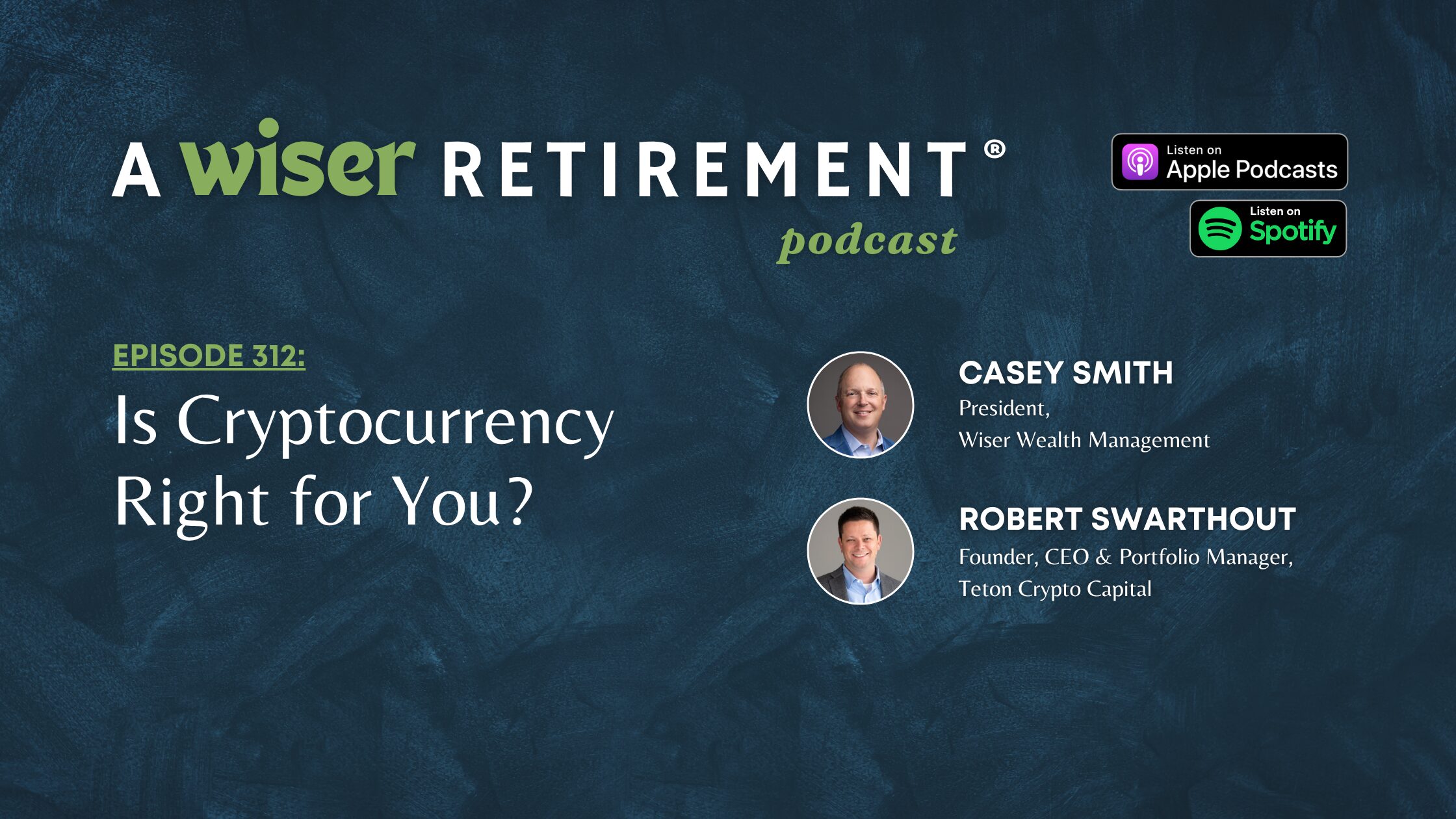
Is Crypto Right for You?
Listen or Watch
Summary
Think of cryptocurrency as “internet-native money” that runs on blockchains, specialized databases that keep tamper-resistant records. While you may not see crypto in your everyday checkout flow yet, it increasingly powers transactions and financial “plumbing” behind the scenes, especially in places where traditional banking is less reliable.
What’s Changed Since 2020
Volatility remains, but zero risk is off the table: Bitcoin isn’t “going to zero,” and real-world use cases have grown. Day-to-day swings are normal; zooming out matters.
Cleaner headlines, clearer rules (slowly): The conversation has shifted from scandals to structure. Recent guidance and proposed legislation especially around stablecoins, are setting more defined “rules of the road.”
From hype to utility: Meme coins still exist (there’s even a DOGE ETF), but investor focus is shifting toward networks with real functionality.
Stablecoins: The Quiet Force
Stablecoins are designed to hold a steady value (typically $1). You don’t buy them for price appreciation, you use them as transaction “cash” inside crypto. The bigger story: the reserves behind stablecoins (think cash and Treasuries) may become a meaningful buyer of U.S. government debt, reinforcing the dollar’s global role.
How Major Tokens Stack Up
- Bitcoin: “Digital gold.” More store-of-value than daily payment rail.
- Ethereum & Smart-Contract Chains (e.g., Solana, Cardano): Run decentralized applications and DeFi. Each has trade-offs in speed, cost, and community.
- XRP (Ripple): Built for fast, low-cost payments.
- Stablecoins (USDT/Tether, USDC): Transactional cash; not investment vehicles for growth.
- Meme Coins (DOGE, etc.): Pop culture collectibles—speculative and not tied to real utility.
Crypto vs. Stocks & Bonds
Cryptocurrency is best viewed as a distinct, high-volatility asset class. Within crypto, market cap tiers roughly map to risk (large-cap like Bitcoin at the lower-risk end; tiny altcoins at the highest). Unlike money markets, stablecoins don’t pay yield to holders, any reserve income accrues to the issuer, not you.
Practical Ways to Get Exposure
ETFs: For many investors, spot crypto ETFs offer simpler access and lower fees than buying coins directly on exchanges.
Indexes (as they roll out): Broad crypto index products can reduce the “token picking” problem and provide diversified exposure.
Who Shouldn’t Invest (Yet)
If you’re carrying high-interest debt, lack an emergency fund, or tend to trade emotionally, press pause. Get the financial basics in place first.
How Much? A Sensible Allocation
At Wiser, clients who opted in to crypto typically hold ~1.5%–5% depending on risk tolerance. That slice can be meaningful in up markets and tolerable in down markets. The key is to set it, rebalance it, and avoid day-trading the headlines.
Crypto in Retirement Plans
Direct crypto in 401(k)s is still limited. Where brokerage windows exist, ETFs may be available, but position sizing and discipline matter. Many investors may be better served waiting for diversified index products rather than buying single-asset funds.
The Road Ahead (Next 5 Years)
Expect clearer regulation, more institutional participation, and growing “behind-the-scenes” usage (payments, settlement, supply chain). You may be using crypto rails without even noticing just like you don’t need to understand the internet to place an online order.
Cryptocurrency has matured from fringe curiosity to legitimate (still volatile) building block of modern finance. You don’t need a giant bet to participate. A small, rules-based allocation, preferably via low-cost ETFs or diversified indexes, can give you exposure to the upside while keeping core financial plans intact.
Listen to the full Wiser Retirement Podcast episode with Casey Smith and Robert Swarthout to hear the nuances, examples, and practical tips discussed here. If you’re a Wiser client and want to add your crypto allocation, reach out to your advisor today.
- Schedule a Complimentary Consultation: Discover how our services can help you achieve financial confidence.
- Access Our Free Guides: Gain valuable insights on topics such as why most financial plans fail, how to leave a financial legacy, post-divorce financial planning, and more!
- Subscribe to A Wiser Retirement® YouTube Channel.
- Listen to A Wiser Retirement® Podcast and access previous episodes.
Connect:

Recent posts


Share This Story, Choose Your Platform!
Wiser Wealth Management, Inc (“Wiser Wealth”) is a registered investment adviser with the U.S. Securities and Exchange Commission (SEC). As a registered investment adviser, Wiser Wealth and its employees are subject to various rules, filings, and requirements. You can visit the SEC’s website here to obtain further information on our firm or investment adviser’s registration.
Wiser Wealth’s website provides general information regarding our business along with access to additional investment related information, various financial calculators, and external / third party links. Material presented on this website is believed to be from reliable sources and is meant for informational purposes only. Wiser Wealth does not endorse or accept responsibility for the content of any third-party website and is not affiliated with any third-party website or social media page. Wiser Wealth does not expressly or implicitly adopt or endorse any of the expressions, opinions or content posted by third party websites or on social media pages. While Wiser Wealth uses reasonable efforts to obtain information from sources it believes to be reliable, we make no representation that the information or opinions contained in our publications are accurate, reliable, or complete.
To the extent that you utilize any financial calculators or links in our website, you acknowledge and understand that the information provided to you should not be construed as personal investment advice from Wiser Wealth or any of its investment professionals. Advice provided by Wiser Wealth is given only within the context of our contractual agreement with the client. Wiser Wealth does not offer legal, accounting or tax advice. Consult your own attorney, accountant, and other professionals for these services.