
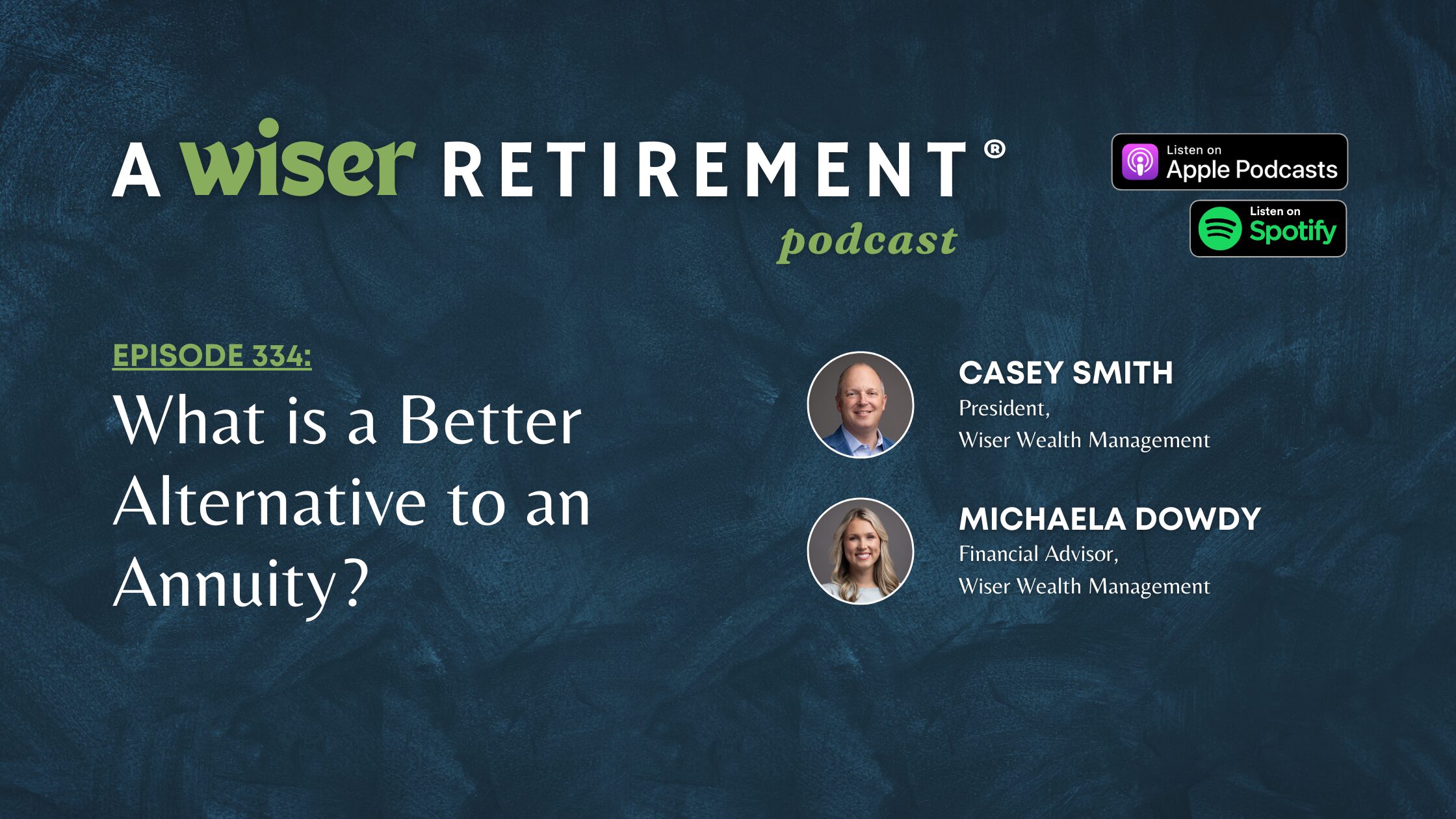
What is a Better Alternative to an Annuity?
Listen or Watch
Summary
One of the biggest concerns with annuities is how they are marketed. In many cases, the conversation is less about what is best for the client and more about the commission paid to the salesperson. These products can come with strong sales incentives, which may create conflicts of interest.
That matters because most people buying annuities are not experts in insurance contracts or investment structures. They are often trusting an advisor, family acquaintance, or salesperson who presents the product as the answer to their fears about retirement, market risk, or running out of money.
The Only Annuity That May Deserve a Pass
Not all annuities are equally problematic. A basic fixed annuity may make sense in limited cases for someone who truly wants a guaranteed stream of income and is comfortable giving up flexibility in exchange for that certainty.
But even then, investors should ask whether a simpler alternative like a CD, bond ladder, or another conservative income strategy could accomplish the same goal with less complexity and fewer tradeoffs.
Why Variable and Indexed Annuities Raise Red Flags
The bigger issues tend to show up in variable annuities and indexed annuities.
Variable annuities often allow market participation, but layer on insurance costs, administrative fees, rider fees, and expensive investment sub-accounts. Indexed annuities may sound attractive because they promise downside protection with some market upside, but the formulas used to calculate returns can be so restrictive that investors capture little of the upside anyway.
In some cases, the stock market may be up significantly while the annuity owner sees little to no return because of caps, participation rates, spreads, or overly complex monthly reset formulas buried in the fine print.
The Real Cost of “Guarantees”
The guarantees attached to annuities are rarely free. They are typically paid for through:
-
High internal fees
-
Expensive optional riders
-
Limited upside
-
Long surrender periods
-
Restricted access to your own money
That means the investor is often trading one type of risk for another. Instead of market volatility, they take on liquidity risk, inflation risk, and complexity risk.
A guaranteed income stream may sound comforting today, but if that income does not keep pace with inflation, its purchasing power can shrink dramatically over time.
Surrender Charges Can Be a Major Problem
Another common drawback is the surrender period. Many annuities lock your money up for 7 to 10 years, sometimes longer, with steep penalties for early withdrawal.
That can create serious problems if your life changes, your health changes, or you simply realize the product is not serving your best interests. Even if you can withdraw a limited portion each year penalty-free, large lump-sum access is often restricted at the exact time you may need it most.
Complexity Is a Warning Sign
If a product takes pages of disclosures, multiple fact sheets, and a deep dive into the contract language just to understand how it works, that is worth paying attention to.
A good financial strategy should be understandable. If the person selling the annuity cannot clearly explain how they are paid, what the fees are, how the returns are calculated, and what happens if you need your money back, that should be a major red flag.
A Better Alternative: Build Your Own Retirement Income Plan
Rather than paying an insurance company to create a complicated product, investors can often create their own retirement income strategy using a diversified portfolio and a cash reserve system.
The approach discussed in the episode includes:
-
A cash bucket holding 2 to 5 years of planned withdrawals
-
A bond bucket for added stability and income
-
A stock bucket for long-term growth and inflation protection
This structure can allow retirees to continue taking monthly withdrawals without being forced to sell stocks during a downturn. It is a way to manage volatility thoughtfully, while still participating in long-term market growth.
Why Time Matters More Than Market Fear
Time helps solve many investing fears. Markets can be highly volatile in the short term, but historically, long-term investors have been rewarded for staying disciplined.
That is why fear-based selling can be so dangerous. If someone convinces you that market volatility means you should give up growth, liquidity, and simplicity, you may end up paying a high price for emotional comfort.
Volatility is not always something to eliminate completely. In many cases, it is the cost of earning the returns needed to outpace inflation and preserve purchasing power over time.
What If You Already Own an Annuity?
Owning an annuity does not automatically mean you made a terrible decision or that you should cancel it immediately.
In some situations, especially when a contract is older or surrender charges have expired, it may make sense to unwind the annuity and move into a lower-cost strategy. In other cases, keeping the annuity may still be the best move based on tax consequences, age, risk tolerance, or the specific income benefits already in place.
The key is not panic, it is analysis. Every contract should be reviewed based on where you are today, not just on whether it was a good idea when it was sold.
Four Questions to Ask Before Buying an Annuity
If someone is recommending an annuity, start with these questions:
-
How are you compensated?
Ask directly whether they receive a commission. -
What are all the internal fees?
Look beyond the headline number and ask about riders, admin costs, and fund expenses. -
What are the surrender terms?
Understand exactly how long your money is locked up and what penalties apply. -
What is the realistic long-term return?
Ask how the product actually performs after caps, spreads, and fees.
If those answers are vague, hard to explain, or loaded with sales language, that tells you a lot.
Annuities are often sold as a cure for retirement anxiety, but many of them create new problems while solving old fears. High fees, limited flexibility, complexity, and inflation risk can all chip away at the value they promise.
For many investors, a low-cost, diversified portfolio with a well-planned withdrawal strategy can offer more control, more transparency, and more long-term value than a heavily commissioned insurance product.
The best retirement plan is not the one with the flashiest guarantee. It is the one you fully understand and that is built around your actual goals. Do you have questions regarding your annuity? We offer a complimentary consultation to help.
- Schedule a Complimentary Consultation: Discover how our services can help you achieve financial confidence.
- Access Our Free Guides: Gain valuable insights on topics such as why most financial plans fail, how to leave a financial legacy, post-divorce financial planning, and more!
- Subscribe to A Wiser Retirement® YouTube Channel.
- Listen to A Wiser Retirement® Podcast and access previous episodes.
Connect:

Recent posts



Share This Story, Choose Your Platform!
Wiser Wealth Management, Inc (“Wiser Wealth”) is a registered investment adviser with the U.S. Securities and Exchange Commission (SEC). As a registered investment adviser, Wiser Wealth and its employees are subject to various rules, filings, and requirements. You can visit the SEC’s website here to obtain further information on our firm or investment adviser’s registration.
Wiser Wealth’s website provides general information regarding our business along with access to additional investment related information, various financial calculators, and external / third party links. Material presented on this website is believed to be from reliable sources and is meant for informational purposes only. Wiser Wealth does not endorse or accept responsibility for the content of any third-party website and is not affiliated with any third-party website or social media page. Wiser Wealth does not expressly or implicitly adopt or endorse any of the expressions, opinions or content posted by third party websites or on social media pages. While Wiser Wealth uses reasonable efforts to obtain information from sources it believes to be reliable, we make no representation that the information or opinions contained in our publications are accurate, reliable, or complete.
To the extent that you utilize any financial calculators or links in our website, you acknowledge and understand that the information provided to you should not be construed as personal investment advice from Wiser Wealth or any of its investment professionals. Advice provided by Wiser Wealth is given only within the context of our contractual agreement with the client. Wiser Wealth does not offer legal, accounting or tax advice. Consult your own attorney, accountant, and other professionals for these services.