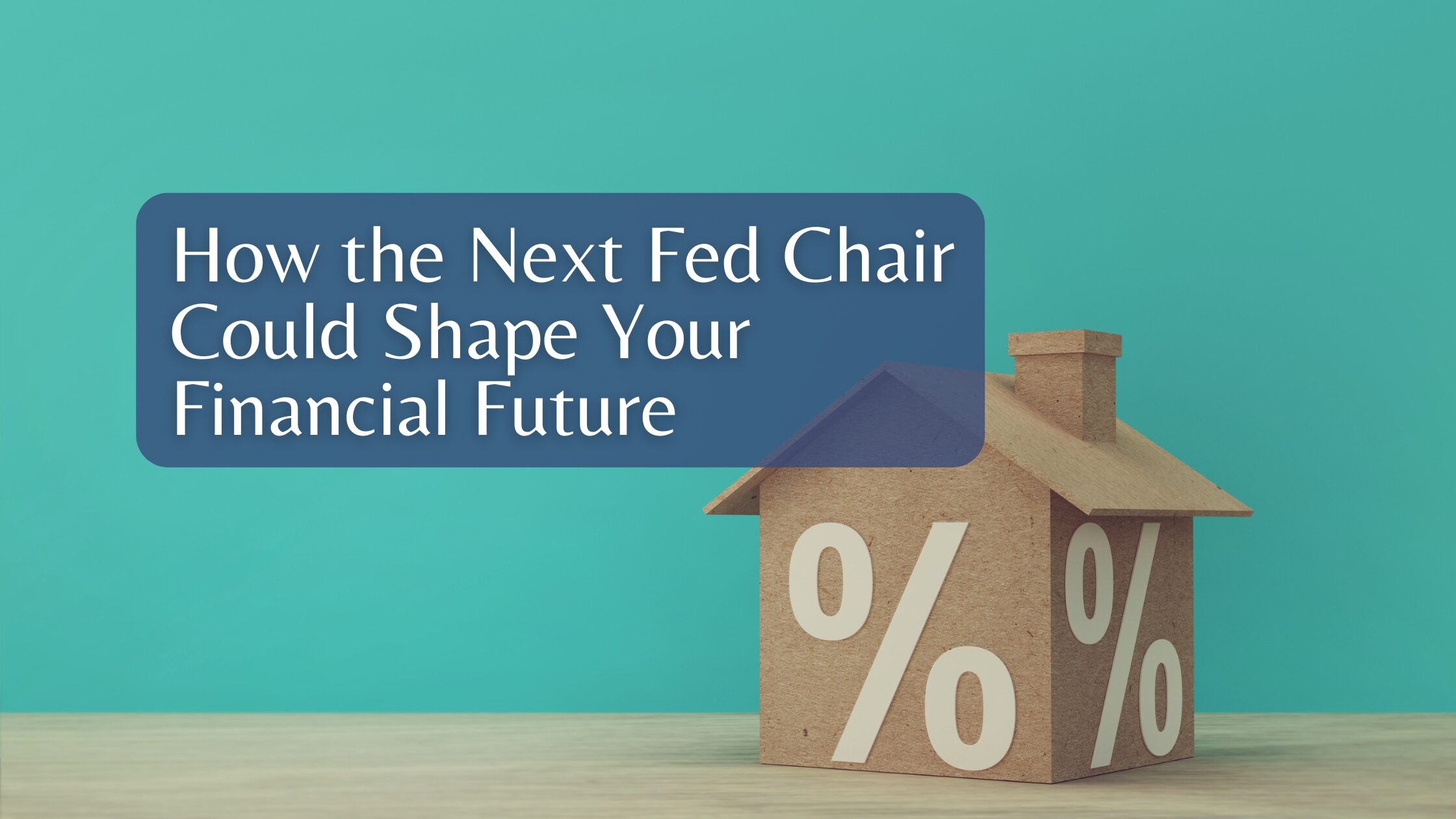
How the New Fed Chair Could Shape Your Financial Future
The Federal Reserve plays a major role in shaping the economy, interest rates, inflation, and market conditions. With Kevin Warsh emerging as the incoming Fed chair, investors are beginning to ask an important question: What could this mean for markets, borrowing costs, and the broader economy?

Kevin Warsh brings a unique background that blends law, finance, government policy, and technology investing. His leadership style and economic philosophy could influence everything from mortgage rates to stock market volatility in the years ahead.

Kevin Warsh’s Background

Warsh graduated from Stanford before earning his law degree from Harvard. Early in his career, he worked in mergers and acquisitions at Morgan Stanley before moving into public policy. He later served in the George W. Bush administration as a top economic advisor and executive secretary of the National Economic Council.

At just 35 years old, Warsh became one of the youngest members of the Federal Reserve Board, serving from 2006 through 2011. During his time at the Fed, he became known for his concerns surrounding aggressive monetary policy, particularly quantitative easing after the financial crisis.

Since leaving the Fed, Warsh has remained active in economic policy and academia through Stanford and the Hoover Institution, while also building strong ties to Silicon Valley and technology investing.

A More Hawkish Approach to Inflation

One of the most important aspects of Warsh’s economic philosophy is his focus on controlling inflation. He has consistently criticized prolonged low interest rates, large Federal Reserve balance sheets, and what he describes as “mission creep” at the Fed.

That inflation-focused mindset may appeal to investors who remember how quickly prices rose during 2021 and 2022. A Fed chair willing to act earlier against inflation could help prevent similar economic overheating in the future.

However, this approach could also mean interest rates remain higher for longer if inflation begins to rise again.

Could Interest Rates Move Lower?

There is growing debate around whether rates should eventually come down, especially as artificial intelligence improves productivity and business efficiency. Lower rates could create several economic benefits, including:

  • Cheaper mortgages and auto loans
  • Lower borrowing costs for businesses
  • Easier refinancing opportunities
  • Increased consumer spending
  • Potentially higher stock and housing prices

Warsh’s ties to technology and innovation may give him a unique perspective on how AI-driven productivity could impact the economy.

The Potential Risks

While lower rates can stimulate growth, they also carry risks if inflation begins to rise again. If inflation proves stubborn, the Fed could be forced to reverse course and tighten monetary policy more aggressively.

Warsh has also supported reducing the size of the Fed’s balance sheet and limiting government intervention in financial markets. In the short term, that could lead to more market volatility because investors may not see the same level of Federal Reserve support they became accustomed to over the past decade.

On the other hand, some economists argue that less intervention can create a healthier long-term economy driven by actual productivity and business growth rather than artificially cheap money.

Bullish vs. Bearish Outcomes

The bullish case for a Warsh-led Fed includes:

  • Lower interest rates with controlled inflation
  • Stronger economic growth
  • Rising home and asset values
  • Higher real wages
  • Improved borrowing conditions for consumers and businesses

The bearish case would involve:

  • Higher interest rates staying in place longer
  • Softer housing and stock markets
  • More expensive borrowing costs
  • Slower economic activity

At the same time, a more inflation-focused Fed could help preserve purchasing power and benefit savers over the long run.

The Bigger Picture for Investors

No one truly knows how any Fed chair will respond once economic conditions begin changing in real time. Political pressure surrounding the Federal Reserve has also become more visible in recent years, regardless of which party controls the White House.

What investors can focus on instead is maintaining a disciplined long-term approach. Markets, interest rates, and Fed policy will continue evolving, but long-term financial planning should remain centered around consistent investing, diversification, and adapting to changing economic environments.

Ultimately, economic growth is driven by businesses, workers, innovation, and productivity, not just any single Fed chair or political figure.

Casey Smith
President, Wiser Wealth Management

Listen to Our Podcast:

learn-more-2025-new

Recent posts

Share This Story, Choose Your Platform!

Wiser Wealth Management, Inc (“Wiser Wealth”) is a registered investment adviser with the U.S. Securities and Exchange Commission (SEC). As a registered investment adviser, Wiser Wealth and its employees are subject to various rules, filings, and requirements. You can visit the SEC’s website here to obtain further information on our firm or investment adviser’s registration.

Wiser Wealth’s website provides general information regarding our business along with access to additional investment related information, various financial calculators, and external / third party links. Material presented on this website is believed to be from reliable sources and is meant for informational purposes only. Wiser Wealth does not endorse or accept responsibility for the content of any third-party website and is not affiliated with any third-party website or social media page. Wiser Wealth does not expressly or implicitly adopt or endorse any of the expressions, opinions or content posted by third party websites or on social media pages. While Wiser Wealth uses reasonable efforts to obtain information from sources it believes to be reliable, we make no representation that the information or opinions contained in our publications are accurate, reliable, or complete.

To the extent that you utilize any financial calculators or links in our website, you acknowledge and understand that the information provided to you should not be construed as personal investment advice from Wiser Wealth or any of its investment professionals. Advice provided by Wiser Wealth is given only within the context of our contractual agreement with the client. Wiser Wealth does not offer legal, accounting or tax advice. Consult your own attorney, accountant, and other professionals for these services.